Home › Nonenal & Body Odor › Can you smell your own body odor?
Nonenal & Body OdorCan You Smell Your Own "Old Person Smell"? How to Check Without Asking Anyone
The people most worried about it are often the ones who can't detect it. Here's why your nose isn't a reliable judge, and a quiet way to find out anyway.

Disclosure: The Soap Digest is owned by the same company that makes TanniBar. We rank it first and we earn money when you buy it. Every other brand here is linked without payment, and we try to describe each one fairly. Check the facts for yourself. How we handle this.
In this guide
“How do you know if you need it? Can you smell yourself?” That question, from a Reddit thread about persimmon soap, gets asked in some form almost every time the topic comes up. It’s the right question, because with this particular smell, the answer is often no.
Why you probably can’t smell yourself
Two things work against you.
Your nose tunes you out. Your brain filters constant, familiar smells so it can notice new ones. It’s called olfactory adaptation, and it’s the reason you stop smelling your own house. You live with your own skin all day, so your brain files its smell as background.
Your sense of smell may be fading. Smell sensitivity tends to decline with age, and that’s also when nonenal tends to appear. Research published in 2001 found 2-nonenal only in people aged 40 and older, and a 2016 study found emissions from the neck rising with age.
So the people most likely to produce the odor are also the least likely to notice it. Everyone around them notices it first.
Other people really can tell. In a 2012 Monell Chemical Senses Center study, volunteers could pick out body odor from people aged 75 to 95 by smell alone. Interestingly, they rated it less intense and less unpleasant than odor from younger adults. “Old person smell” is distinctive, but it isn’t necessarily strong.

The quiet signs
You may not smell it on your skin, but you might notice:
- Your pillowcase smells stale soon after washing.
- Shirt collars and knitwear have a musty or “old cupboard” smell even when they look clean.
- Your car or favorite chair has a smell you can’t place.
- Family behavior: someone cracks the car window, or a grandchild wrinkles their nose at a hug.
- You “phantom-smell” an older relative. One Reddit user kept smelling her mother or grandmother before realizing the smell was her own.
“I asked my teenage son if I smelled weird/different…”
People describe the smell as greasy, grassy, dusty, musty or stale, and occasionally “vinegary.” It’s different from sweat, which is sharper and sour.
The 14-day pillowcase check
Fabrics collect this odor, and a pillowcase gets hours of contact with your neck and scalp every night. That makes it a better test than your nose on your own skin.
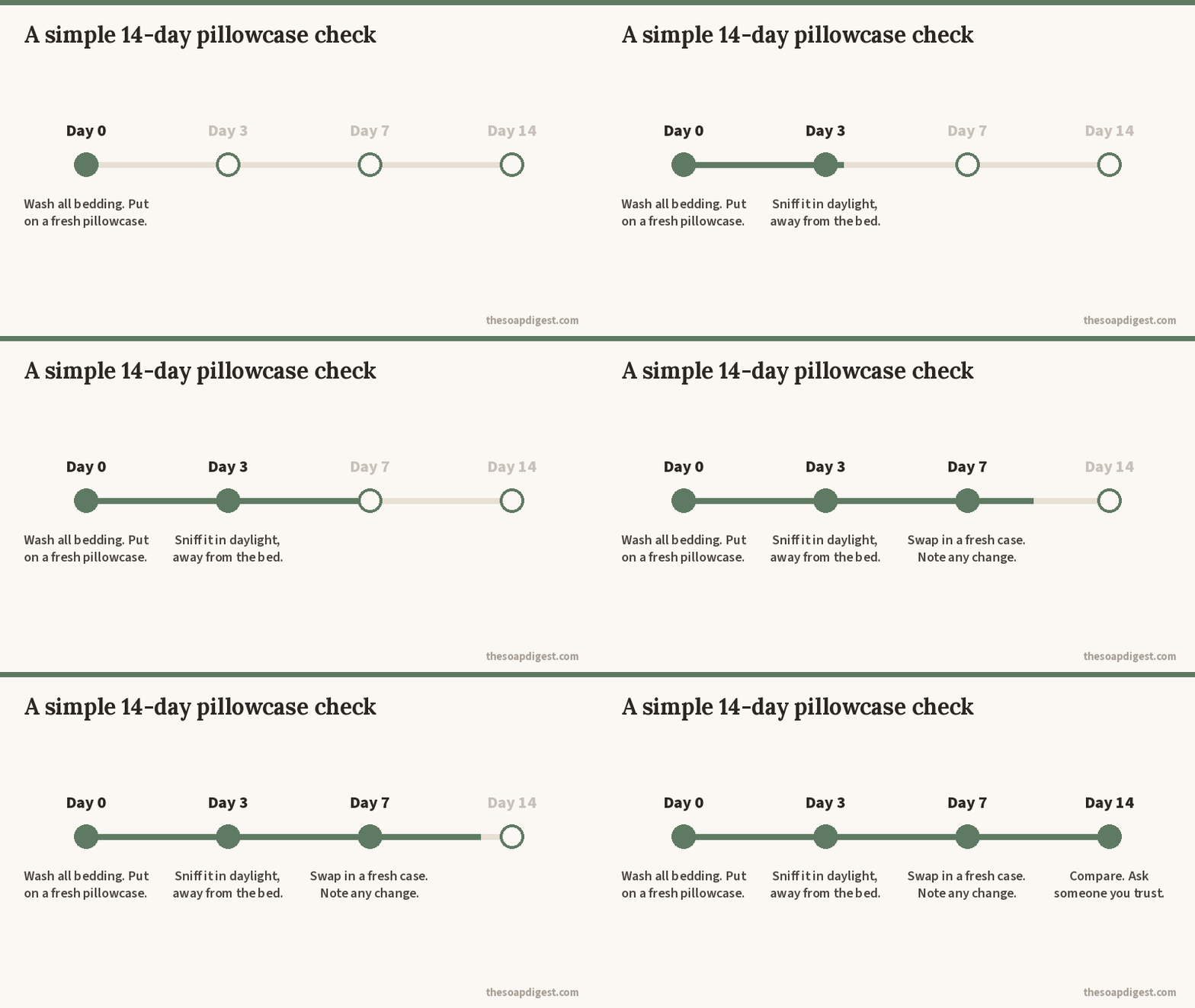
- Day 0: start clean. Wash all your bedding with an unscented detergent, and put on a fresh pillowcase.
- Day 3: sniff it away from the bed. Take the pillowcase to another room (ideally one you haven’t been sitting in) and smell the area where your neck rests. Fresh air resets your nose, so step outside first if you can.
- Day 7: swap and note. Put on a clean case, and write down what you noticed: stale, grassy, dusty, or nothing.
- Day 14: compare, and ask for help if you want it. If you started a new routine (like persimmon soap on your neck and scalp) on day 7, compare the two cases. If you have someone you trust, let them do the sniffing and don’t tell them which case is which.
If both pillowcases smell fine, great. You may not have nonenal odor at all. If the smell is sharp or sour rather than stale, it’s more likely sweat or bacteria. Our guide on why persimmon soap sometimes doesn’t work covers the other causes.

Asking someone (kindly)
If you’d rather just ask, choose someone close who will be honest, like a partner, adult child or close friend, and make it easy for them:
- “I read that skin chemistry changes after 40. Would you tell me honestly if you ever notice a stale smell on my pillow or clothes?”
- Ask about things, not you: “Does this cardigan smell musty to you?”
If you’re the one who has noticed it on someone else, the most common advice in community threads is to lead with the fix and skip the diagnosis. Quietly put a new soap in the shower, change the pillowcases more often, and wash the collars.

TanniBar Persimmon Tannin Bar
If you're buying for someone else, TanniBar is unscented and the brand says it ships in unmarked outer packaging, so it can simply appear in the shower.
Check price →We own TanniBar and earn from sales. 30-day refund, no return needed.When it’s not nonenal
A sudden change in how you smell, or an unusual odor (sweet or fruity, fishy, ammonia-like, or bleach-like), can have medical causes, including diabetes, kidney or liver problems, infections or medications. It’s worth a quick conversation with your doctor, especially if you have other symptoms.
The bottom line
Not being able to smell yourself is normal. It doesn’t mean you smell, and it doesn’t mean you don’t. Your pillowcase gives you a private, reliable answer in two weeks. If it turns out to be nonenal, it’s common, it isn’t a hygiene failing, and it usually responds to a targeted routine.
Frequently asked questions
Why can't I smell my own body odor?
Your brain tunes out constant, familiar smells (olfactory adaptation), and many people's sense of smell declines with age. The result is that the person producing an odor is often the last to notice it.
What does nonenal smell like?
Researchers describe 2-nonenal as greasy and grassy. People describe it as musty, dusty, stale, like an old closet or a grandparent's house, and sometimes "vinegary" or "like old books".
At what age does nonenal odor start?
In the best-known study, 2-nonenal was detected only in people aged 40 and older, and later research found emissions rising with age. Many women notice it during perimenopause.
How do I tell my partner or parent they smell?
Keep it private, kind and practical. Frame it as something common and chemical rather than a hygiene failing, and offer a solution in the same breath, such as a new soap for the shower and fresh pillowcases. Some people simply replace the soap without a conversation.
Sources
- Haze S. et al. (2001). 2-Nonenal newly found in human body odor tends to increase with aging. J Invest Dermatol.
- Kimura K. et al. (2016). Measurement of 2-nonenal and diacetyl emanating from human skin surface. J Chromatogr B.
- Iitani K. et al. (2023). Gas-phase biosensors (bio-sniffers) for measurement of 2-nonenal. Sensors.
- Mitro S. et al. (2012). The smell of age: perception and discrimination of body odors of different ages. PLoS ONE.
- r/Menopause: "Persimmon soap really works! (Who knew!?)"
- r/AusSkincare: "Persimmon soap recommendations please"