Home › Talking About It › Telling a parent they smell
Talking About ItHow to Tell Your Elderly Parent They Smell, Kindly
Most advice on this treats it as a wording problem. Read enough caregiver threads and you find the opposite: people have already had the conversation, often several times, and it didn't work. What changes the outcome is usually not a better sentence.

Disclosure: The Soap Digest is owned by the same company that makes TanniBar. We rank it first and we earn money when you buy it. Every other brand here is linked without payment, and we try to describe each one fairly. Check the facts for yourself. How we handle this.
In this guide
Search for how to tell an elderly parent they smell and you will mostly find scripts. Use “I” statements. Pick a private moment. Lead with love. None of that is wrong, and almost none of it is the problem. In caregiver threads the people asking are rarely on their first attempt — they have raised it gently, raised it bluntly, been shouted at, been laughed off, and are asking the internet because the words ran out months ago. The useful question is not what do I say, but what am I actually dealing with — because several quite different situations get filed under the same sentence, and they need different responses.
The short version
- Identify the smell before you open your mouth. Stale and greasy, ammonia-like, faecal, dental and wound odors point in completely different directions, and only one of them is a soap conversation.
- Check whether the source is the person or the room. Chairs, mattresses and stored clothes hold this kind of odor, and families regularly accuse a person who is actually washing.
- Assume they may not be able to smell it. Impaired smell affects roughly a quarter of adults over 53 and most people over 80, and self-report badly underestimates it.
- If the conversation has already failed, change the task rather than the wording. That is the part with trial evidence behind it.
- Refusal to wash is usually a symptom — of cognitive change, fear, pain, exhaustion or low mood — and gets treated as character.
First work out which smell it is
“They smell” is one phrase covering several unrelated processes with different fixes. Before planning a conversation, spend a couple of days working out which one you are describing.
- Stale, greasy, slightly like old cooking oil or a musty book. Strongest on the back of the neck, behind the ears, on the upper back, on shirt collars and on the pillowcase. Builds slowly over hours and is worst on fabric they have slept in. This is the profile of 2-nonenal, an aldehyde formed when skin surface oils oxidise, which a 2001 Japanese study first identified in human body odor and reported increasing with age, and which a 2016 measurement study later sampled directly from the nape of the neck. Our index of the nonenal research covers what is and is not established about it.
- Sharp, ammonia-like, strongest near a chair, a bed or the bathroom. This is urine, not body odor, and it is a continence conversation, not a hygiene one.
- Faecal. Soiling, or sometimes a bowel problem. Also not a hygiene conversation.
- Coming from the mouth. Dental disease, dry mouth from medication, or an infection. A dentist or GP, not a shower.
- Sweet, foul, or localised to one spot. Check for a wound, a skin fold, a fungal infection or a dressing. This one is urgent rather than delicate.
Only the first of those is the smell persimmon soap or any other wash is aimed at. If you get this wrong you will ask someone to shower more when what they need is a continence assessment, and the smell will not change, and they will conclude — correctly — that you were not really listening.
Then check whether it is them or the room
This is the step most people skip, and skipping it is how the conversation goes badly wrong.
The molecule behind that stale, greasy smell is fat-soluble and insoluble in water. It travels out of skin with sebum, soaks into whatever absorbs sebum, and stays there. An armchair someone sits in for eight hours a day, a mattress, a car seat, a coat that is never washed and a stack of clothes that get re-worn are all reservoirs, and they re-dose the person within seconds of contact. A 2026 field study measuring 35 solo dwellings of older adults found that a combined package of ventilation, an entrance buffer and enclosed storage sustained visitors’ willingness to return better than ventilation alone — the surroundings, not just the body, carry a measurable share of the problem.

One r/AgingParents post is the perfect illustration: the writer’s mother showers regularly and, in her daughter’s words, smells fine — but she leaned towards the dog, caught the smell, and blamed the dog.
“her recliner REALLY smells of pee”
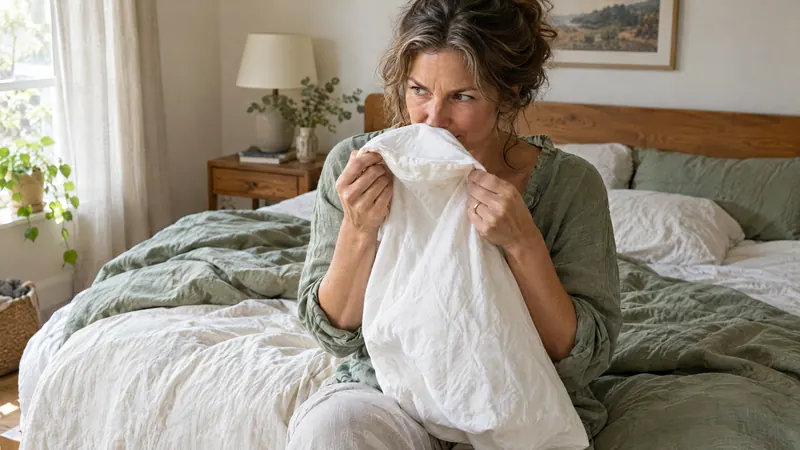
There is a simple test. Skin-source odor builds gradually through the day and is at its worst in the morning, on the pillow. Reservoir odor arrives the instant they sit down, put the coat on, or get into the car, and it is there straight after a shower. If a freshly washed person in fresh clothes smells fine for ten minutes and then does not, you are smelling the furniture. That is not a conversation about them at all — it is a conversation about a chair, which is enormously easier to have. Our guides to getting the smell out of clothes and out of a house cover what to do next.
Assume they genuinely cannot smell it
The most common sentence in these threads is some version of how can they not know. Often they cannot.
A JAMA study of 2,491 adults aged 53 to 97 in Beaver Dam, Wisconsin found impaired olfaction in 24.5% overall and 62.5% of those aged 80 to 97. The detail that matters most for this conversation is the one about self-report: in that oldest group, asking people whether their sense of smell was impaired correctly identified only 12% of the affected women and 18% of the affected men. Most older people with a real smell impairment do not know they have one. On top of that, the nose filters out constant, familiar background odors — olfactory adaptation — which is why the smell of your own home disappears within minutes of walking into it. We go into this in more detail in can you smell your own body odor.
So when a parent says flatly that they do not smell, the most likely explanation is that they are telling the truth as they experience it. That changes the tone you should take. You are not confronting a denial. You are supplying information they physically do not have, which is a much kinder thing to be doing and a much easier thing to say.
What to actually say
NHS guidance for carers is built around two ideas that also happen to make the conversation land better: washing is private, and you should ask the person how they would prefer to be helped and allow them as much independence as possible. In practice that translates into a few rules.
Name an object, not the person. “Those trousers need a wash — can I put them in with mine?” is a request about trousers. “You smell” is a verdict about a person, and it cannot be agreed to without a loss of face. Almost everything worth saying here can be phrased as the first kind of sentence.
Make one small concrete ask. One load of laundry. One hair wash at the kitchen sink. One change of shirt. Not a new routine, not a standard to live up to.
Attach it to something already happening. People in these threads report the same discovery independently: the washing happens when there is a reason for it. A visit, an appointment, a meal out. The Alzheimer’s Society suggests exactly this — encouraging someone to wash or change for a particular occasion. It is not a trick; it restores a normal motive to a task that has lost one.
If they get agitated, stop and come back later. Same source, same advice: change the subject, let them settle, try again another time. Nothing is gained by winning the exchange.
For a partner rather than a parent the shape is the same, though the honesty can be blunter. What still fails is any version delivered as a verdict on their character rather than a request about a specific thing. If you are the one being told, our guide to why a wash routine stops working is a more useful reply than defending yourself.
When talking has already failed, change the task
This is the part that has real evidence behind it, and it is not about wording at all.
A randomised controlled trial across 15 nursing homes in Oregon and North Carolina took 73 residents with dementia who became agitated during bathing and compared usual care against two alternatives: person-centred showering, and an in-bed “towel bath” using no-rinse soap. Aggressive incidents fell by 53% and 60% respectively, with no significant change in the control group. Critically, neither approach resulted in fewer parts of the body being washed, both improved skin condition, and neither increased colonisation with potentially harmful bacteria. A companion analysis reported the same pattern from the caregiving side. Getting someone clean and keeping the peace are not in conflict; the standard shower was simply the wrong instrument.

What caregivers describe on Reddit is the same idea arrived at by trial and error: no-rinse wipes instead of a shower, a sponge bath, washing one quarter of the body at a time, hair at the kitchen sink once a week, and laundry as the framing device — “I’m putting a wash on, can you change so I can get those in?”
“With clean clothes and clean hair the non-bathing is much less noticeable”
The Alzheimer’s Society lists the reasons behind refusal that families tend to read as stubbornness: having forgotten the steps involved, believing they have already washed, a physical difficulty that makes it hard, or low mood and depression. Add fear — of falling, of cold, of water — which comes up constantly in these threads and which a shower chair alone does not fix. None of those respond to being told more firmly.
How clean does someone actually need to be?
Less scrubbed than most families assume. The NHS carers’ guidance is a bath or shower at least twice a week, plus washing the genitals and bottom area every day. A daily full shower is not the benchmark, and for someone who finds it frightening or exhausting, insisting on one can cost you the twice-weekly wash you would otherwise have got.
That matters for the smell too. Because the stale, greasy odor is carried in sebum and lives in fabric, clean clothes and clean hair remove a disproportionate share of what other people actually notice — which is precisely what caregivers report. If the fabric is dealt with and the daily washing is covered, the gap between two showers a week and seven is far smaller than it feels.

TanniBar Persimmon Tannin Bar
If the smell is the stale, greasy kind and the person is willing to wash, a fragrance-free tannin bar is a low-friction swap — it changes the soap, not the routine, which is the one variable in this whole situation that costs nothing to try.
Check price →We own TanniBar and earn from sales. 30-day refund, no return needed.If you get as far as choosing a bar, our persimmon soap comparison sets out what the options are, and persimmon soap vs Lume explains why the two most-recommended products are aimed at different smells. Be realistic about scope: a soap addresses one of the five smells listed at the top of this page, and only while someone is actually washing with it.
When this is a medical conversation, not a hygiene one
- Any urinary incontinence. NHS advice is to see a GP about any type of it, and to ask about continence services — it is common and treatable, and it is not something to manage with more showers.
- A smell that has changed, or sudden heavy sweating. NHS guidance is to see a GP if body odour has not improved with self-care and it is affecting self-esteem, if you notice a change in how it usually smells, or if someone suddenly begins to sweat much more than usual.
- A new refusal to wash in someone who always did. Treat it as a change in health — cognitive, physical or mood — and raise it with their GP rather than with them.
- Any localised or sweet-smelling odor, which can mean a wound or infection.
Don’t carry this on your own
Two things come up far too late in most of these threads. Your local council will normally carry out a needs assessment covering support with washing and laundry, and the NHS carers’ guidance points to the Carers Direct helpline on 0300 123 1053 or a local carers’ organisation. Bringing in a paid carer is often what breaks the deadlock: plenty of people accept help from a professional that they will not accept from their own child, and that is not a failure on your part.
The bottom line
Work out which smell it is. Work out whether it is coming from the person or from the chair. Assume they cannot smell it, because statistically they probably cannot. Then make one small request about one specific object, and if that does not work, change the task rather than the volume. The trial evidence and the accumulated experience of a few thousand caregivers point the same way: the thing that moves is the method, not the message.
If it turns out the smell is on the furniture, nothing needs to be said to anyone. That is worth checking first for its own sake.
Frequently asked questions
How do I tell my mum or dad they smell without hurting them?
Name an object, not the person, and make one small concrete request. "Those trousers need a wash, can I put them in?" lands very differently from "you smell." It gives them something to agree to that does not require admitting anything about themselves. Before that, check where the smell is actually coming from — in a lot of households the strongest source is a chair, a mattress or a pile of stored clothes, and in that case the conversation is about the chair and there is nothing to say about the person at all.
Why does my parent insist they don't smell?
They may not be able to detect it. A population study of 2,491 adults aged 53 to 97 found impaired smell in about a quarter overall and in 62.5% of those aged 80 to 97 — and self-report was a poor guide, identifying only 12 to 18% of impairment in that oldest group. On top of that, the nose filters out constant familiar odors. So "they must know" is frequently wrong, and treating denial as dishonesty starts the conversation in the wrong place.
How often does an older person actually need to shower?
Less often than most families assume. NHS guidance for carers is a bath or shower at least twice a week, plus washing the genitals and bottom area every day. A daily full shower is not the standard, and for someone who finds showering frightening or exhausting it can be counterproductive. Clean clothes, clean hair and daily washing of the areas that matter most do a large share of the work.
What if they refuse to wash at all?
Refusal is usually a symptom rather than stubbornness. The Alzheimer's Society lists forgetting the steps, believing they have already washed, physical difficulty and low mood among the reasons. A randomised trial in nursing homes found that switching to person-centred showering or an in-bed towel bath with no-rinse soap cut aggressive incidents by 53% and 60% respectively, without washing fewer parts of the body and without worsening skin condition. Changing the task works better than winning the argument.
Does persimmon soap help in this situation?
Only for one of the several smells that get lumped together here, and only if the person is willing to wash. Persimmon tannin soap is aimed at 2-nonenal, the stale, greasy odor formed when skin surface oils oxidise, which research has measured rising with age. It does nothing for urine, for soiling, for dental odor or for an infected wound, and it cannot help at all if the source is a chair or a mattress. Sort the smell first; the soap question comes later, if at all.
Sources
- NHS: How to help someone you care for keep clean (carers' guide) — bathing at least twice a week, daily washing of genitals and bottom, dignity and independence, needs assessment, Carers Direct 0300 123 1053
- Alzheimer's Society: When a person with dementia doesn't want to change their clothes or wash
- Sloane P.D. et al. (2004). Effect of person-centered showering and the towel bath on bathing-associated aggression, agitation, and discomfort in nursing home residents with dementia: a randomized, controlled trial. J Am Geriatr Soc 52(11):1795–804.
- Hoeffer B. et al. (2006). Assisting cognitively impaired nursing home residents with bathing: effects of two bathing interventions on caregiving. Gerontologist 46(4):524–32.
- Murphy C. et al. (2002). Prevalence of olfactory impairment in older adults. JAMA 288(18):2307–12.
- Dalton P. (2000). Psychophysical and behavioral characteristics of olfactory adaptation. Chem Senses 25(4):487–92.
- Haze S. et al. (2001). 2-Nonenal newly found in human body odor tends to increase with aging. J Invest Dermatol 116(4):520–4.
- Kimura K. et al. (2016). Measurement of 2-nonenal and diacetyl emanating from human skin surface employing passive flux sampler-GCMS system. J Chromatogr B 1028:181–5.
- Zhao S. et al. (2026). Age-related odor and design buffering in elderly solo housing: two-stage study of visitor behavioral intention. Sci Rep.
- PubChem compound summary: (E)-2-nonenal (CID 5283335) — XLogP 3.1; "soluble in most fixed oils; insoluble in water"
- NHS: Urinary incontinence — "See a GP if you have any type of urinary incontinence"
- NHS: Body odour (BO) — when to see a GP
- r/AgingParents — "I'm the bad guy over her pee smell. Again."
- r/AgingParents — "Father's hygiene habits are awful"
- r/AgingParents — "Dad (71) horrible hygiene. Gets aggressive or defensive when we comment."
- TanniBar product page (brand's own claims: fragrance-free, triple-milled, ingredient list, refund policy, advice to check with a doctor if you have an active skin condition)