Home › Nonenal & Body Odor › Fungal infection and odor
Nonenal & Body OdorCan a Fungal Infection Cause Body Odor? What Is Published
The antifungal-shampoo theory is spreading fast in body-odour threads, and the logic behind it is reasonable. The evidence underneath it turns out to be almost entirely absent — and two famously smelly conditions with fungal-sounding names are bacterial.

Disclosure: The Soap Digest is owned by the same company that makes TanniBar. We rank it first and we earn money when you buy it. Every other brand here is linked without payment, and we try to describe each one fairly. Check the facts for yourself. How we handle this.
In this guide
- The short answer, and why it is not quite a no
- What the yeast actually does, and where
- Where the yeast and the molecule have actually met in print
- What a search for fungal body odour returns
- Two smelly conditions named after fungi that are not fungal
- Why the shampoo can help anyway
- How to tell which of the three you are dealing with
- Bottom line
Somewhere in the last couple of years, body-odour threads acquired a new theory. It goes like this: you have tried every deodorant, you have tried every soap, and then you borrow the anti-dandruff shampoo out of the shower and use it on your armpits — and something finally shifts. The conclusion follows naturally. If an antifungal worked, the problem must have been fungal.
It is a reasonable inference, and it deserves checking before it becomes received wisdom — the treatment involved is a medicine rather than a cosmetic, and the published record behind it is much thinner than the confidence in the threads.
The short version
- A yeast genus, Malassezia, really does live in the human armpit, and in a flask Malassezia furfur produces 61 volatile compounds — which ones depending on what fat it is fed.
- Published research has never linked either fact to human body odour. Searches pairing Malassezia, antifungals or fungus-words with body odour or axillary odour return nothing at all.
- The two best-known smelly conditions with fungal-sounding names — trichomycosis axillaris and gram-negative toe web infection — are bacterial or bacteria-led.
- Fungal skin infection presents as a rash, not a smell. If there is nothing to see, there is nothing for the diagnosis to rest on.
- An antifungal wash can genuinely improve things without a fungus being involved, and that matters, because it means improvement does not identify a cause.
The short answer, and why it is not quite a no
Start with what is true. The most thorough published characterisation of what grows in the armpit describes four principal groups of bacteria — staphylococci, aerobic coryneforms, micrococci and propionibacteria — “and the yeast genus Malassezia” (Taylor et al., 2003). So anyone who says there is yeast in your armpit is right.
The same study is also the problem with the theory. Having counted everything, the authors compared what they found against how much the volunteers’ armpits actually smelled, and the comparison “demonstrated the greatest association between odour levels and the presence of aerobic coryneforms in the under-arm”. The coryneforms are bacteria. The one investigation that weighed the yeast and the bacteria side by side, then measured smell, found the smell tracking the bacteria. The corresponding author worked at Unilever, which sells deodorants; that does not make the measurement wrong, but it is worth knowing.
“If that shampoo works your problem is fungal.”
That eight-word comment is the whole theory, and the thread it appears in argues with itself rather helpfully.
“Body odor is usually caused by bacteria.”
Both are offered a few comments apart with equal confidence. Only one has a literature behind it.
What the yeast actually does, and where
Here the story gets genuinely interesting, because the mechanism is not silly at all.
Malassezia is lipophilic: it lives on sebum-rich skin and works on fats with its own enzymes. Researchers have tried to turn that against it, designing fatty acid esters that the yeast’s own exo-enzymes cleave into antimicrobial fatty acids — a targeted self-kill (Koch et al., 2020; three authors worked at the fragrance company Symrise). A small joke is buried in that paper: those esters cannot be used at useful topical strengths because of, in the authors’ words, “the disadvantage of strong odour”. The anti-Malassezia agent smells.
More to the point, the yeast makes volatiles of its own. In an experiment whose title does the explaining — Yeast Smell Like What They Eat — Malassezia furfur was grown in four liquid media, one with oleic acid, one with palmitic acid, one with both and one standard, and the headspace above each culture was profiled. Sixty-one volatile organic compounds turned up, dominated by alkanes, alcohols, ketones and furanic compounds, and the authors showed that “each tested growth medium stimulates the production of a different volatiles profile” (Gonzalez et al., 2019). Hexan-1-ol, pentyl acetate, dimethyl sulphide and others separated the treatments.

Two things about that. It is a plausible route to a human smell, and nobody should pretend otherwise. It also happened in liquid medium, with no skin and no nose involved — and 2-nonenal, the compound associated with age-related body odour, is not among the volatiles reported.
Where the yeast and the molecule have actually met in print
There is exactly one indexed paper in which 2-nonenal and Malassezia appear together in the title or abstract, and it is about beef. Researchers profiling flavour development in post-mortem aged beef found nine aroma-active compounds, (E)-2-nonenal among them, enriched in beef wet-aged for seven days, and five microbial genera — Trichosporon, Prauserella, Rhodotorula, Malassezia and Corynebacterium — “constituted the functional microbiota responsible for flavor formation” (Wang et al., 2023).

So in the only place the two have been formally connected, both the yeast and the classic odour bacterium are credited — in a cold room, in meat, by food scientists. That is not evidence about armpits. It is a fair illustration of what the research on this molecule mostly is: chemistry done for commercial reasons in other industries.
What a search for fungal body odour returns
The honest centre of this post is a set of empty result pages.
A PubMed title-and-abstract search pairing Malassezia with “body odor” returns nothing. Pairing “antifungal” with “body odor” returns nothing. Pairing any fungus-word with “axillary odor” returns nothing. Pityriasis versicolor — the signature Malassezia skin disease, the one with the visible patches — has never appeared in a title or abstract alongside odour either, and nor has seborrhoeic dermatitis, except in two false friends where the smell under discussion is coal tar. A search pairing Candida with body odour returns a single record, and that record is a monograph entry titled “Garlic”.
These are absences rather than proof, with one qualification that earns them their place: a trial or case series proposing a fungal cause of body odour would be very unlikely to avoid these particular words in its title or abstract. The silence is not a wording artefact.
Ketoconazole specifically — the drug in the shampoo the threads recommend — appears alongside odour in six papers, and we read all six: an experimental study of Christmas decorations with topical preparations, a cyclodextrin inclusion complex, the antifungal activity of a Brazilian fruit essential oil, a vaginitis treatment trial, a scalp white piedra case report, and a stability study of compounded oral liquids. Not one concerns deodorising human skin.
The official health bodies are silent in both directions, which is the cleanest version of the point. The NHS page on antifungal medicines does not mention smell. The NHS page on ringworm does not mention smell. And the NHS page on body odour does not mention fungus or yeast.
Two smelly conditions named after fungi that are not fungal
If the fungal theory has a real origin, this is probably it, and it is a naming accident twice over.
Trichomycosis axillaris sounds definitive: a condition of the underarm hair, a name ending in -mycosis, and malodour among its symptoms. It is bacterial. A 2025 study of 78 patients describes it as “the most common superficial bacterial infection of hair shaft, mainly of axillary hairs and producing pigmented concretions around hair shaft caused by various species of corynebacteria”. Nineteen had no symptoms; the rest reported “malodor, staining of clothes, and itching”. Cultures grew diphtheroids and staphylococci (Kalimuthu et al., 2025). Gritty yellow nodules clinging along underarm hairs plus a stubborn smell is a thing to show a clinician — and not something an antifungal is for.
Gram-negative toe web infection makes the same mistake in the other direction, and the specialists have said so in print: the 2026 German guideline on what is now called infected interdigital intertrigo records that the old term “misleadingly implied a soft-tissue infection of the foot” and was replaced. The condition itself is the one real place fungi belong in a discussion about smell — a “mixed infection of the toe webs in which gram-negative bacteria … seem prevalent, but in which gram-positive pathogens … and fungi (dermatophytes, yeasts) also occur”, diagnosed clinically from “painful macerated erosions or ulcers with yellow-green exudate, putrid odor and edema”, and treated with antiseptic and antifungal agents together (Zeyen et al., 2026).
Note what that is and is not: an open, weeping, visibly damaged skin surface, on feet, where the smell is attributed to the bacterial side. It is not a vague stale smell in a healthy armpit.
Why the shampoo can help anyway
None of the above says the shampoo did nothing. It says the improvement does not identify the cause, and there are at least three ordinary explanations.
The first is the dullest and probably the strongest. An antifungal shampoo used as a body wash is a surfactant left on the skin for a minute or two, which is a more thorough wash than most armpits get. The same thread reports the same result from rubbing alcohol, witch hazel, glycolic acid toner, benzoyl peroxide and chlorhexidine — five mechanisms, one outcome. When five different chemistries all “work”, the common factor is unlikely to be the chemistry.
The second is that the armpit is not a fixed personal trait. In an experiment where product use was manipulated rather than observed, stopping deodorant and antiperspirant raised culturable bacterial density toward non-user levels, applying antiperspirant again made it “decline dramatically”, and two days off shifted the community toward Staphylococcaceae (Urban et al., 2016). Change what you put on your skin and the population changes over days — which is also why a new product often works for a fortnight and then stops, as we have argued about hypochlorous acid sprays.
The third comes from a proper trial. Thirty volunteers wore zinc oxide on one armpit and placebo on the other, double-blind, for 13 days. Odour-producing Corynebacterium and Staphylococcus hominis fell, and self-judged malodour fell with them — while skin-surface pH moved in the opposite direction to what the acidic-deodorant story predicts (Ågren et al., 2020). A product can work while the explanation for why it works is wrong. That applies to antifungal shampoos, to acidic deodorants, and to soap — including the kind we sell.
That trial design is worth a second look, because it treats a person’s two armpits as each other’s control. They are not quite identical: one typing study of 53 people found left-right differences in the bacterial community in roughly half of them, which is the measured part of the common complaint that one armpit smells worse than the other. What has not been shown is that the difference is usually large enough for anyone else to notice.
How to tell which of the three you are dealing with
There are really three processes competing for the blame, and they sort more easily than they sound.

- Look before you smell. Fungal skin infection shows up as a rash. The NHS describes the main symptom of ringworm as a rash that “may be scaly, dry, swollen or itchy”, and Malassezia folliculitis — the condition popularly called fungal acne — “presents as pruritic, erythematous papules and pustules” and is routinely mistaken for ordinary acne (Draelos et al., 2026). If your skin looks normal, a fungal explanation has nothing to stand on.
- If there is a rash, get it identified rather than guessing. That same review warns about “patients inappropriately applying antifungals without a confirmed diagnosis”, driven partly by social media trends — which is, precisely, the Reddit thread. A pharmacist is the NHS’s suggested first stop, and if a rash and a smell arrive together, our note on irritation and underarm rashes covers why treating the smell first is the wrong order.
- With no rash, sort sweat from oil. Sour, oniony, strongest in the armpit, worst after exertion and responsive to deodorant points to the bacterial route — bacteria acting on precursors secreted in apocrine sweat, ending in a thioalcohol (Minhas et al., 2018). Faint, stale and greasy, strongest on collars and pillowcases and barely touched by deodorant points to the oxidation route, which has no microbes in its mechanism at all (Haze et al., 2001; emission measured against skin rises with age, Kimura et al., 2016).
- Match the product to the process. A leave-on acidic deodorant is aimed at the bacterial route; we set out why that is a different target from a rinse-off bar. A rinse-off tannin soap is aimed at the oily one. Neither treats an infection, and our list of reasons persimmon soap does not work exists largely because people treat one process with a product built for another.
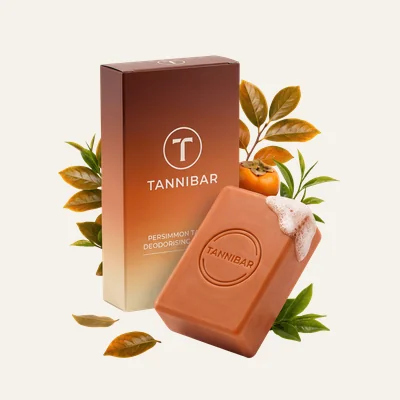
TanniBar Persimmon Tannin Bar
Worth knowing before you spend anything: a true soap is not an antifungal, and a bar that promises to fix an infection is overpromising.
Check price →We own TanniBar and earn from sales. 30-day refund, no return needed.One caveat from a different angle. The most recent direct look at fungi on the exact sites people are treating — axillary and groin swabs, sequenced rather than cultured — found the mycobiome dominated by Candida at 69.3 per cent, with Malassezia “rare (0.7%)” (Nascimento et al., 2025). Those were intensive-care patients rather than healthy adults and the authors call it a pilot study, so read it loosely — but it does not describe an armpit teeming with the organism ketoconazole targets.
When to see a doctor or pharmacist. Antifungals are medicines, not cosmetics. The NHS advises seeing a pharmacist or GP if you think you have a fungal infection, and speaking to one first about existing conditions, allergies, interactions and use in pregnancy or breastfeeding; side effects listed include itching or burning, redness, rash, nausea and stomach upset, with rare severe reactions including liver damage (NHS, antifungal medicines). For odour itself, the NHS advises seeing a GP if body odour has not improved with self-care and you notice a change in how it usually smells, you suddenly start sweating much more than usual, or it is affecting your self-esteem; the page also lists conditions such as diabetes, kidney disease and liver disease, and medicines including antidepressants, among things that can make body odour worse (NHS, body odour).
Bottom line
Can a fungal infection cause body odour? Nobody has published anything showing that it does, and the shape of the silence is unusually complete: not one title-or-abstract pairing of the relevant yeast, the relevant drug class or the word “fungus” with body odour or axillary odour, no mention of smell on the NHS fungal pages, and no mention of fungus on the NHS body-odour page. What exists instead is a yeast that genuinely lives there, genuinely makes smells in a flask, and has never been caught doing it on a person — plus two famously malodorous conditions with fungal-sounding names that turn out to be bacterial.
The practical version is short. If you can see a rash, get it looked at. If you cannot, a fungal diagnosis has nothing to rest on, and the question becomes the ordinary one of sweat versus oil — which is where our comparison of the best persimmon soap options can help. And if the shampoo is working for you, keep using it if a pharmacist is content with that. Just hold the explanation more loosely than the result.
Frequently asked questions
Can a fungal infection cause body odor?
Not in any way that has been published. Fungi certainly live on skin, including the yeast genus Malassezia in the armpit itself, and in a flask Malassezia furfur produces dozens of volatile compounds. But a PubMed title-and-abstract search for Malassezia together with body odor returns no results at all, and so does a search for antifungal with body odor, and so does a search for any fungus-word with axillary odor. Pityriasis versicolor, the commonest Malassezia skin disease, has never been described in a title or abstract alongside odour either. The NHS pages on fungal skin infections do not mention smell, and the NHS page on body odour does not mention fungus. That is an absence of evidence rather than proof of a negative, but it is a very wide absence.
Why did antifungal shampoo seem to help my body odor then?
There are at least three explanations that do not require a fungus. First, an antifungal shampoo used as a body wash is also a detergent left on the skin for a minute or two, which is a different wash from a quick soaping. Second, the armpit community is not a fixed personal trait: in an experiment where product use was manipulated, stopping deodorant raised bacterial density and applying antiperspirant again made it fall sharply, with the composition shifting over days. Third, something can reduce bacteria and reported smell while the mechanism the marketing proposes moves the opposite way, which is exactly what a zinc oxide trial found for skin pH. None of that means the shampoo did nothing. It means an improvement does not identify the cause.
Is trichomycosis axillaris a fungal infection?
No, despite the name. A 2025 study of 78 patients describes trichomycosis axillaris as the most common superficial bacterial infection of the hair shaft, caused by corynebacteria, producing pigmented concretions along axillary hairs. Malodour was among the symptoms patients reported, alongside staining of clothes and itching, and cultures grew diphtheroids and staphylococci. So the classic smelly-armpit diagnosis whose name ends in -mycosis is caused by bacteria. If you have gritty yellow nodules stuck along underarm hairs and a persistent smell, that is worth showing a clinician rather than treating with an antifungal.
What does a fungal skin infection actually look like?
A rash, which is the useful part. The NHS describes the main symptom of ringworm as a rash that may be scaly, dry, swollen or itchy, and advises speaking to a pharmacist first. Malassezia folliculitis, the condition popularly called fungal acne, presents as itchy red papules and pustules and is routinely mistaken for ordinary acne. Neither presentation is a smell. If there is nothing to see, a fungal diagnosis has nothing to rest on, and a 2026 dermatology review flags exactly this — patients applying antifungals without a confirmed diagnosis, driven partly by social media.
Could a yeast be making the smell without infecting me?
This is the strongest version of the question and the honest answer is that it has not been tested on people. Malassezia furfur grown in liquid media produced 61 volatile compounds, and the profile changed depending on which fat it was fed — the paper is literally titled Yeast Smell Like What They Eat. Alkanes, alcohols, ketones and furanic compounds dominated, with hexan-1-ol, dimethyl sulphide and pentyl acetate among the compounds that separated the treatments. That is a real mechanism and worth watching. It is also glassware, and 2-nonenal, the compound associated with age-related body odour, was not among the volatiles reported.
Does persimmon soap do anything for a fungal problem?
No, and we would rather say so. A persimmon tannin bar is a rinse-off true soap aimed at the oxidised skin oils behind the stale, age-related smell. It is not an antifungal, it is not a treatment for any infection, and there is no peer-reviewed trial of persimmon soap on human body odour of any kind — a title-and-abstract search for persimmon and soap returns nothing. If you have a rash, an infection or a smell that keeps coming back from one spot, that needs a pharmacist or a GP, not a bar of soap.
So where does fungus fit in at all?
In one documented place, and it is instructive. Infected interdigital intertrigo, also called gram-negative toe web infection, is a mixed infection of the toe webs in which gram-negative bacteria appear prevalent but gram-positive bacteria and fungi, including dermatophytes and yeasts, also occur. A 2026 German guideline describes it as diagnosed clinically from macerated erosions with yellow-green exudate, putrid odour and swelling, and managed with anti-inflammatory, antiseptic and antifungal agents together. In other words, the one smelly condition where fungi are genuinely part of the picture is a mixed infection, the smell is attributed to the bacterial side, and it is on feet rather than in armpits.
Sources
- Taylor D., Daulby A., Grimshaw S., James G., Mercer J., Vaziri S. (2003). Characterization of the microflora of the human axilla. Int J Cosmet Sci 25(3):137-45. (The axillary microflora is described as four principal groups of bacteria — staphylococci, aerobic coryneforms, micrococci and propionibacteria — "and the yeast genus Malassezia". Comparisons between axillary bacterial numbers and odour levels "demonstrated the greatest association between odour levels and the presence of aerobic coryneforms in the under-arm". The study that establishes both that the yeast is present and that the odour tracked the bacteria. Corresponding author at Unilever Research & Development; company-affiliated research.)
- Gonzalez M., Celis A.M., Guevara-Suarez M.I., Molina J., Carazzone C. (2019). Yeast Smell Like What They Eat: Analysis of Volatile Organic Compounds of Malassezia furfur in Growth Media Supplemented with Different Lipids. Molecules 24(3):419. (Malassezia furfur grown in four liquid media — mDixon, oleic acid, oleic acid plus palmitic acid, and palmitic acid — profiled by headspace solid-phase microextraction and GC-MS. "A total number of 61 VOCs was found in M. furfur, among which alkanes, alcohols, ketones, and furanic compounds were the most abundant", and the authors "proven that each tested growth medium stimulates the production of a different volatiles profile". Differentiating compounds included hexan-1-ol, pentyl acetate, dimethyl sulphide and 2-methyltetrahydrofuran. 2-Nonenal is not among the reported volatiles. In vitro only; the authors declare no conflict of interest.)
- Koch C., Pesaro M., Schmaus G., Mayser P. (2020). Medium-chain fatty acid esters - Optimising their efficacy as anti-Malassezia agents. Mycoses 63(7):704-710. (Fatty acid esters are cleaved by Malassezia exo-enzymes, releasing fatty acids with antimicrobial activity — a "self-kill" targeted at the site of highest Malassezia density. Minimum inhibitory concentrations of roughly 1,000 to 8,000 ppm across four Malassezia species. The authors note that "as for the disadvantage of strong odour, use of these esters for topical therapy is limited to low concentrations". Agar dilution and GC work; in vivo verification is described as the next step. Three authors at Symrise AG, a fragrance and ingredients company; company-affiliated research.)
- Wang H., Wang J., Wang Y., Gao S., Xu S., Zou X., Meng X. (2023). Characterization and Correlation of Dominant Microbiota and Flavor Development in Different Post-Mortem Processes of Beef. Foods 12(17):3266. (Eleven of 65 compounds were aroma-active by odour activity value, and nine of those, "including 1-pentanol, 1-octen-3-ol, hexanal, nonanal, heptanal, octanal, 2-nonenal, (E)-, 2-octenal, (E)- and 2-decenal, (E)-, were enriched in beef wet-aged for 7 d". Five microbial genera "including Trichosporon, Prauserella, Rhodotorula, Malassezia, and Corynebacterium, constituted the functional microbiota responsible for flavor formation". The only indexed paper in which 2-nonenal and Malassezia appear together, and it is about aging beef rather than human skin.)
- Kalimuthu A., Thappa D.M., Badhe B., Sistla S. (2025). Trichomycosis Axillaris: A Clinicoetiological Study. Indian Dermatol Online J 16(2):270-275. (Cross-sectional study of 78 patients at a tertiary centre in South India. Trichomycosis axillaris is described as "the most common superficial bacterial infection of hair shaft, mainly of axillary hairs and producing pigmented concretions around hair shaft caused by various species of corynebacteria". Nineteen patients were asymptomatic and "others had malodor, staining of clothes, and itching". Culture was positive in 34 cases; 64.71 per cent grew diphtheroids and 41.17 per cent grew Staphylococcus. Limitations stated by the authors include small sample size and poor culture yield. No conflicts of interest declared.)
- Draelos Z.D., Barbieri J.S., Tanghetti E.A., Farris P., Lain E.T., Prevete S., Choi S.Y., Wroblewski K., Baldwin H., Kircik L.H. (2026). Malassezia Folliculitis Presentation, Diagnosis, and Treatment: A Review of "Fungal Acne". J Drugs Dermatol 25(5):427-434. (Narrative review. Malassezia folliculitis "presents as pruritic, erythematous papules and pustules and is often mistaken for other dermatological conditions, including acne vulgaris". The authors write that "interest in MF has intensified in recent years, likely due to social media trends, leading to concern regarding patients inappropriately applying antifungals without a confirmed diagnosis". Risk factors listed are hot humid weather, follicular occlusion and immunocompromise; increased sebum production and lipase activity contribute to pathogenesis. Odour is not among the described features.)
- Nascimento T., Inácio J., Guerreiro D., Patrício P., Proença L., Toscano C., Barroso H. (2025). Exploring the skin mycobiome in intensive care patients: a pilot study on fungal diversity from axillary and groin swabs. BMC Microbiol 25(1):589. (Bilateral axillary-groin swabs from 35 ICU patients on admission and after one week, by culture, MALDI-TOF MS and ITS2 sequencing. ITS2 found "Candida (69.3%) was the most prevalent genus, followed by Penicillium (10.3%) and Cladosporium (4.0%), with Malassezia being rare (0.7%)". A critically ill hospital population rather than healthy adults, and a pilot study by the authors' own description. No competing interests declared.)
- Zeyen C., Abeck D., Becker K., Dissemond J., Kahle B., Lorenzen H.P., Löffler B., Maier-Hasselmann A., Mittank-Weidner T., Nast A., Sunderkötter C. (2026). S1 Guideline on Infected Interdigital Intertrigo (also called Gram-Negative Toe Web Infection). J Dtsch Dermatol Ges 24(6):832-843. (German S1 guideline. "An exudative, macerating, mixed infection of the toe webs in which gram-negative bacteria (Pseudomonas aeruginosa and Enterobacterales) seem prevalent, but in which gram-positive pathogens … and fungi (dermatophytes, yeasts) also occur." Diagnosis is clinical, "based on painful macerated erosions or ulcers with yellow-green exudate, putrid odor and edema", and management "focuses on local therapy with anti-inflammatory, antiseptic, antimycotic agents". The guideline also records that the former German term "gram-negative foot infection" "misleadingly implied a soft-tissue infection of the foot" and was replaced.)
- Urban J., Fergus D.J., Savage A.M., Ehlers M., Menninger H.L., Dunn R.R., Horvath J.E. (2016). The effect of habitual and experimental antiperspirant and deodorant product use on the armpit microbiome. PeerJ 4:e1605. (Product use was manipulated experimentally. Stopping deodorant and antiperspirant raised culturable bacterial density toward the levels seen in habitual non-users; applying antiperspirant again made density decline dramatically. Participants who stopped for two or more days had communities dominated by Staphylococcaceae, while habitual non-users were dominated by Corynebacterium. Evidence that the armpit community tracks what was last applied to it, over days.)
- Ågren M.S., Ghathian K.S.A., Frederiksen A.K.S., Bjerrum M.J., Calum H., Danielsen P.L., Jorgensen L.N., Karlsmark T. (2020). Zinc Oxide Inhibits Axillary Colonization by Members of the Genus Corynebacterium and Attenuates Self-perceived Malodour: A Randomized, Double-blind, Placebo-controlled Trial. Acta Derm Venereol 100(10):adv00145. (Thirty healthy volunteers, zinc oxide on one axilla and placebo on the other, double-blind, 13 days. Odour-producing Corynebacterium spp. and Staphylococcus hominis fell and self-judged malodour was lower on the treated side (p = 0.005), while skin-surface pH rose (p < 0.0005). In vitro, 19 Corynebacterium strains survived less well at pH 5.0 than at pH 6.0. The odour endpoint is self-report. No conflicts declared. Cited here for the general point that an improvement in reported smell does not confirm the mechanism a product claims.)
- Haze S., Gozu Y., Nakamura S., Kohno Y., Sawano K., Ohta H., Yamazaki K. (2001). 2-Nonenal newly found in human body odor tends to increase with aging. J Invest Dermatol 116(4):520-4. (Headspace gas chromatography/mass spectrometry in subjects aged 26 to 75. 2-Nonenal was "detected only in older subjects (40 y or older)" and was generated when omega-7 unsaturated fatty acids were oxidatively decomposed using lipid peroxides as initiator. There are no microbes in that mechanism. All authors were at Shiseido Co. Ltd., which later sold products aimed at this odour; company-affiliated research.)
- Minhas G.S., Bawdon D., Herman R., Rudden M., Stone A.P., James A.G., Thomas G.H., Newstead S. (2018). Structural basis of malodour precursor transport in the human axilla. eLife 7:e34995. (Characterises the transporter that moves apocrine malodour precursors in the human underarm, en route to the thioalcohol 3-methyl-3-sulfanylhexan-1-ol produced by skin bacteria. The bacterial pathway behind classic sour underarm odour, and distinct from the oxidation of skin surface oils.)
- Kimura K., Sekine Y., Furukawa S., Takahashi M., Oikawa D. (2016). Measurement of 2-nonenal and diacetyl emanating from human skin surface employing passive flux sampler-GCMS system. J Chromatogr B 1028:181-185. (Passive flux sampler placed against skin. "The emission flux of 2-nonenal increased with age for both male and female volunteers." Emission varied sharply with sampling position, so the nape of the neck was fixed as the standard site.)
- PubMed title-and-abstract searches for a fungal cause of body odour, run and walked record by record on 16 October 2026. (Malassezia[TIAB] AND "body odor"[TIAB] returns 0. antifungal[TIAB] AND "body odor"[TIAB] returns 0. fung*[TIAB] AND "axillary odor"[TIAB] returns 0. "pityriasis versicolor"[TIAB] AND (odor OR odour) returns 0. candida[TIAB] AND ("body odor"[TIAB] OR "body odour"[TIAB]) returns 1, and it is a monograph entry titled "Garlic" (PMID 30000841). "seborrheic dermatitis"[TIAB] AND (odor[TIAB] OR odour[TIAB]) returns 2, both false friends: a review of topical tar, where the odour is the tar (PMID 19185953), and a 1991 management article (PMID 1835003). Any trial or case series proposing a fungal cause of body odour would be very unlikely to avoid these words in its title or abstract, so these are informative absences rather than wording artefacts.)
- PubMed title-and-abstract search for ketoconazole with odour, walked record by record on 16 October 2026. (Six results, and not one concerns deodorising human skin: an experimental study of Christmas decorations with topical preparations (PMID 41363233), a methylated beta-cyclodextrin inclusion complex with ketoconazole (38731409), the antifungal activity of Gallesia integrifolia fruit essential oil (29706576), a ketoconazole/clindamycin versus metronidazole/nystatin vaginitis trial (15986766), a scalp white piedra case report (14982118), and the stability of compounded oral liquids (8870895). A trial of ketoconazole for body odour would be very unlikely to avoid both words.)
- PubMed title-and-abstract search for persimmon and soap (16 October 2026). (Zero results. Any published study of a persimmon soap would be expected to carry both words in its title or abstract, so there is no peer-reviewed trial of persimmon soap on human body odour.)
- NHS. Antifungal medicines. ("Antifungal medicines are used to treat fungal infections, which most commonly affect your skin, hair and nails." Advises "see a pharmacist or GP if you think you have a fungal infection", and to speak to a pharmacist or GP before taking them about existing conditions and allergies, side effects, interactions and use in pregnancy or breastfeeding. Side effects listed include itching or burning, redness, rash, nausea, stomach pain and diarrhoea, with rare severe reactions including liver damage. Body odour and smell are not mentioned anywhere on the page. Accessed 16 October 2026.)
- NHS. Ringworm. ("The main symptom of ringworm is a rash", which "may be scaly, dry, swollen or itchy", and it "can appear anywhere on the body, including the scalp (tinea capitis) and groin (jock itch)". Advises speaking to a pharmacist first, and seeing a GP if ringworm has not improved after pharmacist-recommended antifungal medicine, if it is on the scalp, or if you have a weakened immune system. Smell and odour are not mentioned anywhere on the page. Accessed 16 October 2026.)
- NHS. Body odour (BO). ("See a GP if" body odour has not improved after treating it yourself and "it's affecting your self-esteem", "you notice a change in how it usually smells" or "you suddenly begin to sweat much more than usual". Things that can make body odour worse are listed as exercise, hot weather, hormonal changes, being overweight, "having a condition like diabetes, kidney disease or liver disease" and "certain types of medicine, such as antidepressants". Neither fungus nor yeast is mentioned anywhere on the page. Accessed 16 October 2026.)
- r/Perimenopause discussion proposing ketoconazole shampoo for persistent underarm odour (25 comments, read 16 October 2026). (Reader demand for this question, and the source of the two quoted fragments. Also the origin of the counter-argument quoted, from a commenter in the same thread.)
- TanniBar product page. (Brand's own claims, re-verified 16 October 2026: ingredients persimmon tannin, green tea leaf extract, vegetable glycerin, shea butter, saponified coconut and palm oil, vitamin E and water; "100% fragrance-free"; "triple-milled to last a month of daily showers" and hard-pressed; around a month of daily full-body showers per bar; 30-day refund with no return needed; free shipping in plain unbranded packaging; "if you have an active skin condition, check with your doctor first" and "if body odour changes suddenly or is accompanied by other symptoms, see a healthcare professional". Company data, not independent testing. The Soap Digest and TanniBar share an owner.)