Home › Sensitive & Mature Skin › Persimmon soap side effects
Sensitive & Mature SkinPersimmon Soap Side Effects: Dryness, Stinging, Rash and Who Should Skip It
Plenty of people use persimmon soap without any trouble. But in reader threads, "is it drying?" and "why does it burn?" come up again and again. Here's what causes those reactions and how to avoid them.

Disclosure: The Soap Digest is owned by the same company that makes TanniBar. We rank it first and we earn money when you buy it. Every other brand here is linked without payment, and we try to describe each one fairly. Check the facts for yourself. How we handle this.
In this guide
- Is persimmon soap safe?
- Side effect 1: dryness and tightness
- Side effect 2: stinging and burning
- Side effect 3: a rash (irritation or allergy)
- Is persimmon soap safe for sensitive skin or eczema?
- How to patch-test a new persimmon soap
- If it irritates your skin: what to do
- When to see a doctor
- The bottom line
Plenty of people use persimmon soap without any trouble. But read enough reader threads and the same worried questions keep coming up. Is it drying? Is it OK for sensitive skin? Why does it sting? One r/Menopause post is simply titled “Ouch…”. Here’s what’s behind those reactions, who should be careful, and how to try a new bar without getting burned.
The short version
- Dryness and tightness are the complaints we see most in reader threads. Tannin is an astringent, and most bars are true soaps, which are alkaline.
- Stinging and burning mostly happen on delicate or broken skin, often after scrubbing with a mesh pouch.
- Rashes can be irritation or a true allergy. Added fragrance is a well-known allergy trigger, while persimmon allergy is described as very rare.
- Patch-test first if you have sensitive skin, eczema or allergies. The method dermatologists recommend is below.
- Stop and see a doctor if a rash spreads, blisters, lasts or keeps coming back. Swelling of the lips, tongue or throat, or trouble breathing, is an emergency.
Is persimmon soap safe?
For most adults with healthy skin, persimmon soap is an ordinary wash-off cleanser with one unusual ingredient: tannin from the persimmon fruit (kakishibu). People use it for the greasy, “old person” smell linked to 2-nonenal, a compound that one study detected only in the body odor of participants aged 40 and over (Haze et al., 2001).
We couldn’t find a published safety study of persimmon soap itself, and there’s no peer-reviewed human trial showing it removes nonenal (we cover that gap in does persimmon soap work?). So this guide draws on three things: what’s known about soap and tannin chemistry, what dermatology bodies say about irritation and allergy, and what users describe. Every source is listed at the end.
Side effect 1: dryness and tightness
This is the complaint that comes up most often in reader threads. In an r/hygiene thread from late August, a reader asked how it treats sensitive skin, and one reply summed up a common view:
“Very drying as it's an astringent”
There are two likely reasons:
- Tannin is an astringent. Tannins are plant compounds that bind to proteins. That’s the dry, puckering feeling you get from an unripe persimmon (Tanaka et al., 2018). Many users describe a similar “squeaky” tight feeling on their skin.
- Most bars are true soap. Traditional bars are made from saponified oils, which are alkaline. Healthy skin is naturally acidic, with an average pH below 5. Soap pushes skin pH up, and skin with a pH below 5 had better barrier function and moisture (Lambers et al., 2006). A dermatology review notes that alkaline soaps tend to cause more dryness and irritation than milder synthetic cleansers, called syndets (Draelos, 2018).
What helps:
- Use it only where odor builds up: scalp, behind the ears, neck, chest and upper back. Use your regular gentle wash everywhere else.
- Keep showers to 5–10 minutes in warm, not hot, water, and moisturize while your skin is still damp. That’s the American Academy of Dermatology’s advice for dry skin. Choose a fragrance-free moisturizer so you don’t add a new scent.
- If you feel tight after a week of daily use, drop to every other day. Plenty of people use it far less. In a September r/Menopause thread, one reader said they use it only on the smelliest spots, about once a week.

Side effect 2: stinging and burning
The “Ouch…” thread in r/Menopause is a good example. The poster had washed her genital area with persimmon soap in a mesh soap pouch and described burning bad enough that she dreaded going to the bathroom. Most replies pointed at the pouch, not only the soap:
“Don't scrub, just use a soapy hand and rinse really well.”
Others added that falling hormone levels can leave that skin drier and easier to tear. That fits with standard vulval-care advice: an NHS patient leaflet recommends washing the vulva once a day with plain water or an emollient, not using soaps there, and not scrubbing with washcloths or brushes (Kent Community Health NHS Trust).
Keep persimmon soap off: the vulva and other intimate skin, your eyes, cuts and scrapes, freshly shaved or waxed skin, and any patch of eczema or psoriasis that’s flaring. Nonenal isn’t concentrated in the groin anyway. Our how-to guide shows where it actually builds up.
Mesh pouches and scrubby sponges are fine for working up lather on your back or shoulders. On thin or sensitive skin, use your hands or a soft washcloth, and rinse well so no tannin film is left behind.
Side effect 3: a rash (irritation or allergy)
A red, itchy rash after a new soap is usually contact dermatitis. The American Academy of Dermatology says it often starts with itching, then a rash, and sometimes blisters. It lists fragrance among the most common allergy triggers (AAD). The NHS notes these reactions usually appear within a few hours or days of contact (NHS).
There are two kinds:
- Irritant reactions come from the product wearing down your skin barrier: too much scrubbing, too often, on skin that’s already dry. They usually settle once you cut back.
- Allergic reactions happen when your immune system reacts to a specific ingredient. They can return every time you use the product, even gently.
Can you be allergic to persimmon?
It’s possible but appears rare. A 2001 study in the Journal of Allergy and Clinical Immunology confirmed persimmon allergy in three patients who had eaten the fruit. It described the allergy as “very rare” and linked it to cross-reactive components shared with pollens and other plant foods (Anliker et al., 2001). Those were food reactions. Our search didn’t turn up a published case report of allergy to persimmon soap. Still, if you know you react to persimmon fruit, skip persimmon soap or ask an allergist first. In the r/Menopause thread, one commenter mentioned an allergy to the persimmon family.
The more likely culprit is everything else in the bar. Many persimmon soaps add perfume or essential oils to cover the tannin’s earthy smell. Check the full ingredient list before you buy: “fragrance,” “parfum,” and essential oils such as lavender or tea tree are all common sensitizers.
Is it really the soap?
Sometimes the rash was there first. In an r/Perimenopause thread about odorous, rash-prone underarms, the poster said persimmon soap hadn’t helped at all. Several replies suggested a yeast or bacterial infection, and one reader said their doctor diagnosed bacterial folliculitis. A soap can’t treat an infection, and an irritated or infected area can smell worse, not better. If the odor comes with a rash, get the rash checked before you blame, or rely on, any soap. Our guide to why persimmon soap doesn’t work covers other odors that aren’t nonenal.
Is persimmon soap safe for sensitive skin or eczema?
There’s no study that answers this directly, so be cautious. The National Eczema Association recommends a fragrance- and dye-free, gentle cleanser, lukewarm water, patting dry instead of rubbing, and moisturizing while skin is still damp (NEA). An astringent, alkaline bar isn’t the gentlest option on that list. If you have eczema or psoriasis:
- ask your dermatologist before starting;
- choose an unscented bar;
- use it only on clear skin in the odor-prone areas, never on a flare;
- patch-test first, as described next.
How to patch-test a new persimmon soap
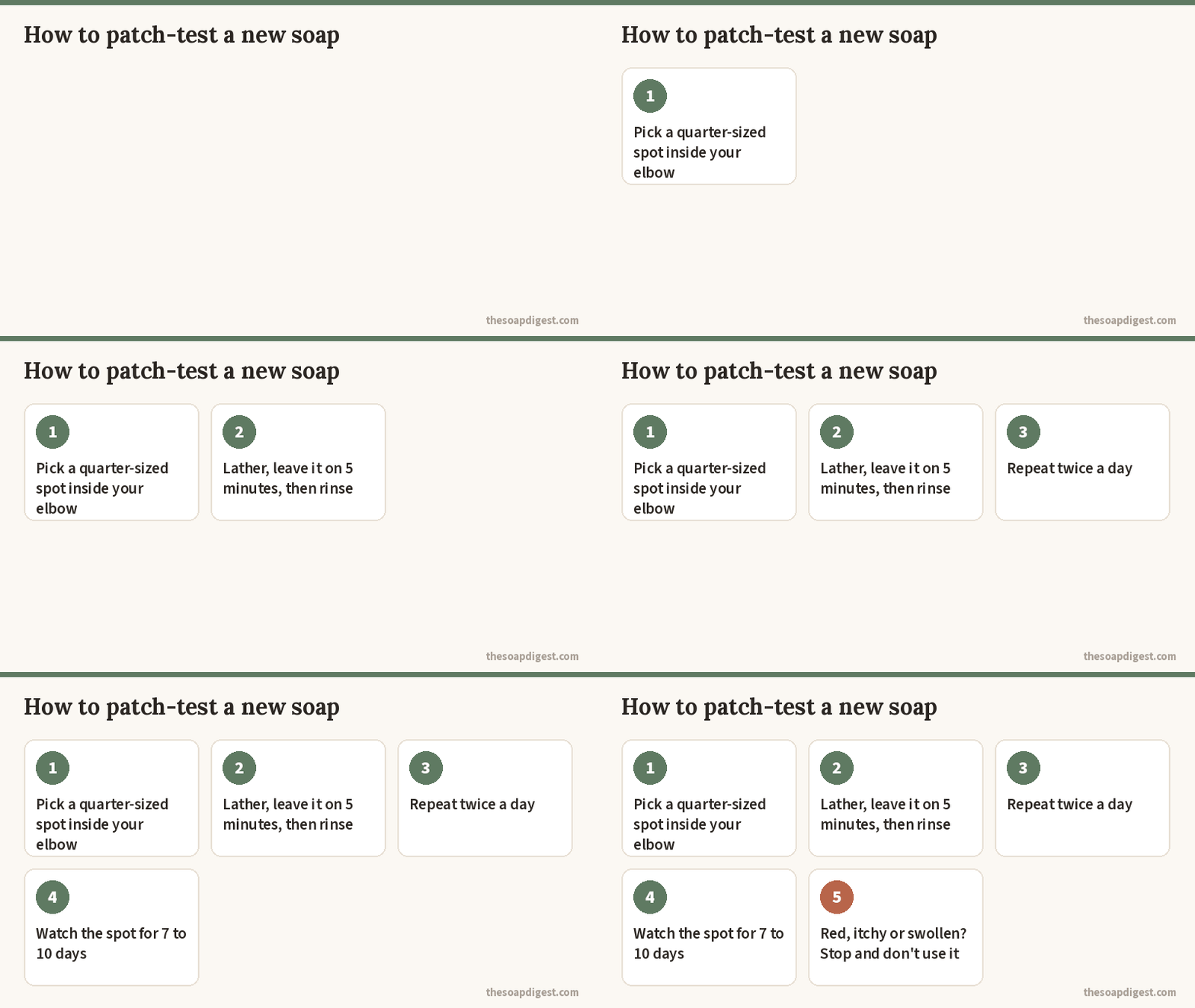
The American Academy of Dermatology suggests testing a new product on a quarter-sized spot, such as the inside of your elbow, twice a day for 7 to 10 days. For a wash-off product like soap, leave it on for about five minutes before rinsing. If the spot doesn’t turn red, itchy or swollen, go ahead and use it (AAD).
If you’re patch-testing because your skin reacts easily, it helps to start with a bar that has no fragrance or essential oils, so there’s less to react to.
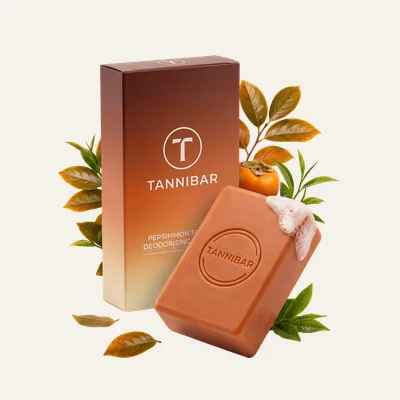
TanniBar Persimmon Tannin Bar
It's the fragrance-free bar in our comparison, with no perfume or essential oils, and glycerin and shea butter added to offset tannin's dryness. It's still a true soap made from coconut and palm oil, so patch-test it like any other.
Check price →We own TanniBar and earn from sales. 30-day refund, no return needed.If it irritates your skin: what to do
- Rinse gently with lukewarm water and stop using the soap on that area.
- Soothe the skin. The AAD suggests a cool compress or petroleum jelly if needed.
- Give it a few days and use only a mild, fragrance-free cleanser there.
- Don’t switch straight to something harsher. People with stubborn odor sometimes pile on acids, benzoyl peroxide or antiseptic washes. On already irritated skin, that can make things worse. In the r/Perimenopause thread, the original poster said a benzoyl peroxide wash gave them a rash that nearly sent them to the ER.
- Try again carefully, if at all. If you think the problem was scrubbing, restart on the target areas only, with your hands. If you think it was an allergy, don’t use that bar again, and check your next one’s ingredient list for whatever the two have in common.

When to see a doctor
See a doctor or dermatologist if:
- a rash spreads, blisters, cracks or weeps;
- it doesn’t clear within a few days of stopping the soap, or it keeps coming back (the NHS advises seeing a GP for persistent, recurring or severe symptoms);
- a sore, itchy or burning genital area doesn’t settle, or you notice unusual discharge or pain when you urinate;
- your body odor changed suddenly or comes with other symptoms. A change in how you smell can have medical causes that no soap will fix.
Call 911 (or your local emergency number) if you notice swelling of the lips, tongue or throat, trouble breathing, or you feel faint after using any new product. These are signs of anaphylaxis (NHS).
This article is general information, not medical advice.
The bottom line
Persimmon soap isn’t dangerous for most people, but it isn’t a gentle all-over body wash either. Most complaints fall into three buckets: dryness from an astringent, alkaline bar; stinging from using it, often with a scrubby pouch, on delicate skin; and rashes, which are more often caused by fragrance or irritation than by persimmon itself. Use it only where odor builds up, go easy on how hard and how often you wash, moisturize afterwards, and patch-test if your skin reacts easily.
If you’re still choosing a bar, our best persimmon soap comparison lists each brand’s scent and key ingredients. That makes it easier to rule out fragrance before you buy. And if you’re not sure the smell is nonenal at all, start with how to tell if you can smell your own body odor.
Frequently asked questions
Is persimmon soap safe to use every day?
For most people with healthy skin, yes, on the areas where odor builds up (neck, behind the ears, scalp, chest and upper back). If your skin starts to feel tight, itchy or flaky, cut back to every other day and moisturize right after you shower.
Can you be allergic to persimmon soap?
Yes, though it seems uncommon. Allergy to persimmon fruit is described in the medical literature as very rare. A reaction to a soap is more often caused by an added fragrance or essential oil, or by the soap simply irritating dry skin. Any rash that appears after you start a new soap is a reason to stop using it.
Is persimmon soap safe for eczema or psoriasis?
Ask your dermatologist first. The National Eczema Association recommends gentle cleansers without fragrance or dye for eczema-prone skin, and tannin is an astringent. If you do try it, keep it off any patch that's flaring and moisturize right after washing.
Can I use persimmon soap on my private parts?
We'd skip it. Readers report stinging and burning, especially after using a scrubby mesh pouch. NHS vulval-care advice is to wash that area once a day with plain water or an emollient, not soap. Nonenal odor isn't concentrated there anyway.
What should I do if persimmon soap burns or causes a rash?
Rinse it off gently and stop using it. A cool compress or petroleum jelly can soothe the skin. If the rash spreads, blisters, lasts more than a few days or keeps coming back, see a doctor. If your lips, tongue or throat swell or you have trouble breathing, call 911 or your local emergency number.
Sources
- American Academy of Dermatology: How to test skin care products
- American Academy of Dermatology: Contact dermatitis
- American Academy of Dermatology: Dermatologists' top tips for relieving dry skin
- National Eczema Association: Bathing and eczema
- NHS: Contact dermatitis
- NHS: Anaphylaxis
- Kent Community Health NHS Foundation Trust: Vulva care (patient leaflet)
- Tanaka T. et al. (2018). Solubility of tannins and preparation of oil-soluble derivatives. J Oleo Sci 67(10):1179–87.
- Lambers H. et al. (2006). Natural skin surface pH is on average below 5, which is beneficial for its resident flora. Int J Cosmet Sci 28(5):359–70.
- Draelos Z.D. (2018). The science behind skin care: Cleansers. J Cosmet Dermatol 17(1):8–14.
- Anliker M.D. et al. (2001). Allergy caused by ingestion of persimmon (Diospyros kaki). J Allergy Clin Immunol 107(4):718–23.
- Haze S. et al. (2001). 2-Nonenal newly found in human body odor tends to increase with aging. J Invest Dermatol 116:520–4.
- TanniBar product page (brand's own claims: ingredients, fragrance-free, refund terms) (company information; we own TanniBar)
- r/hygiene: "Persimmon soap is impressive"
- r/Menopause: "Ouch… anyone have this experience using persimmon soap"
- r/Perimenopause: "Help my terribly stinky, rashy pits!"
- r/Menopause: "2-nonenal and skin changes"